
5
Your Everyday Tomato Sauce
This classic Italian tomato sauce, or 'sugo di pomodoro', is a celebration of rustic simplicity and vibrant, sun-ripened flavour. It can be thought of as a blank canvas because it is the backbone of many other recipes.
JUMP TO RECIPE4
servings
5 min
Prep time
60 min
cook time
65 min
total time
Difficulty
A low score means the recipe is easy to prepare.
Flexibility
A higher score means the amount of an ingredient can be altered.
Time
A high score means more time is required to prepare the recipe.

Hover over (or tap) any wine to see why it pairs well with this dish.
These wines compliment the creamy and salty notes of this dish.
#1

Chianti
Chianti
Tuscan Sangiovese-based wine with sour cherry, herbs, lively acidity, and savoury notes.
More recipes that pair well
Crispy Chicken Sandwich
view this recipeCrispy Chicken Sandwich Sauce
view this recipe
Sausage and Rapini
view this recipe#2
Barbera
Barbera
Crisp, high-acid whites cut through the richness of the pecorino and balance the black pepper beautifully.
More recipes that pair well
Crispy Chicken Sandwich
view this recipeCrispy Chicken Sandwich Sauce
view this recipeSausage and Rapini
view this recipe#3

Zinfandel
Zinfandel
Zinfandel is a bold, fruit-forward red loved for its jammy fruit and smoky, exotic spice notes.
More recipes that pair well
Crispy Chicken Sandwich
view this recipeCrispy Chicken Sandwich Sauce
view this recipeSausage and Rapini
view this recipe#4

Vermentino

Vermentino
Dry, refreshing Mediterranean white with citrus, pear, herbs, and a lightly saline character.
More recipes that pair well
Crispy Chicken Sandwich
view this recipeCrispy Chicken Sandwich Sauce
view this recipeSausage and Rapini
view this recipe#5
Pinot Grigio
Pinot Grigio
Light and crisp, with lemon, pear, green apple, and delicate floral notes.
More recipes that pair well
Crispy Chicken Sandwich
view this recipeCrispy Chicken Sandwich Sauce
view this recipeSausage and Rapini
view this recipeYour Everyday Tomato Sauce
This classic Italian tomato sauce, or 'sugo di pomodoro', is a celebration of rustic simplicity and vibrant, sun-ripened flavour. It can be thought of as a blank canvas because it is the backbone of many other recipes.
Ingredients
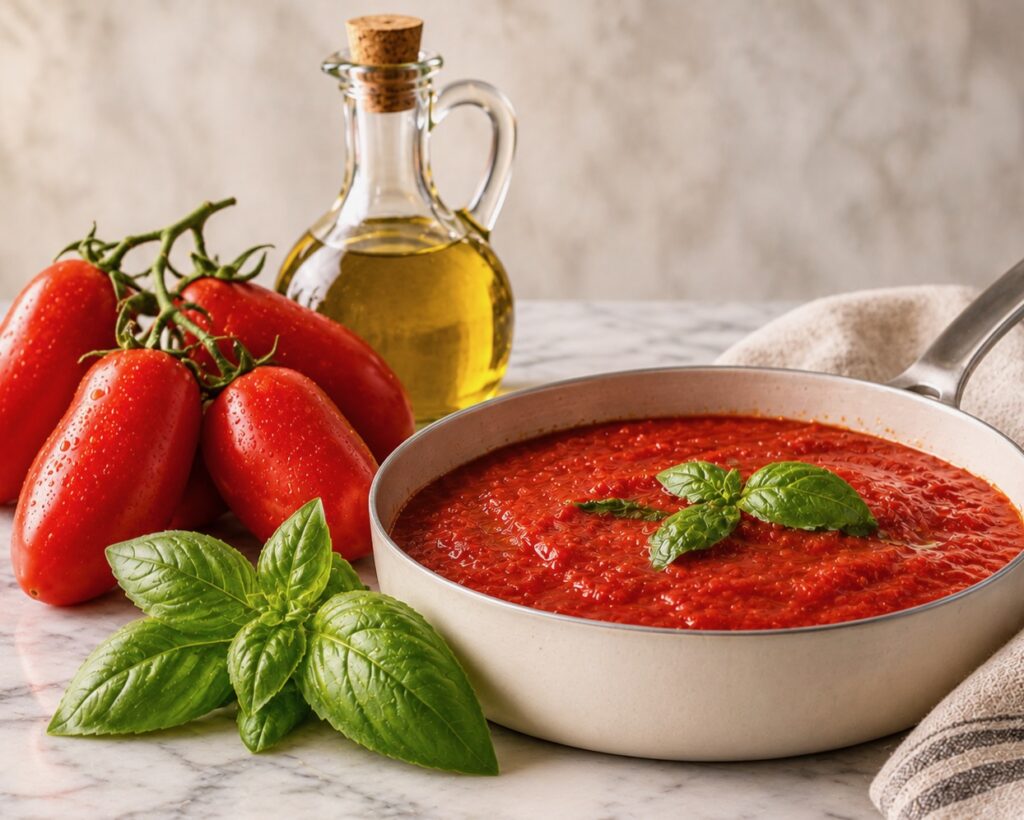
What You’ll Need
Method, step by step
1
Step 1
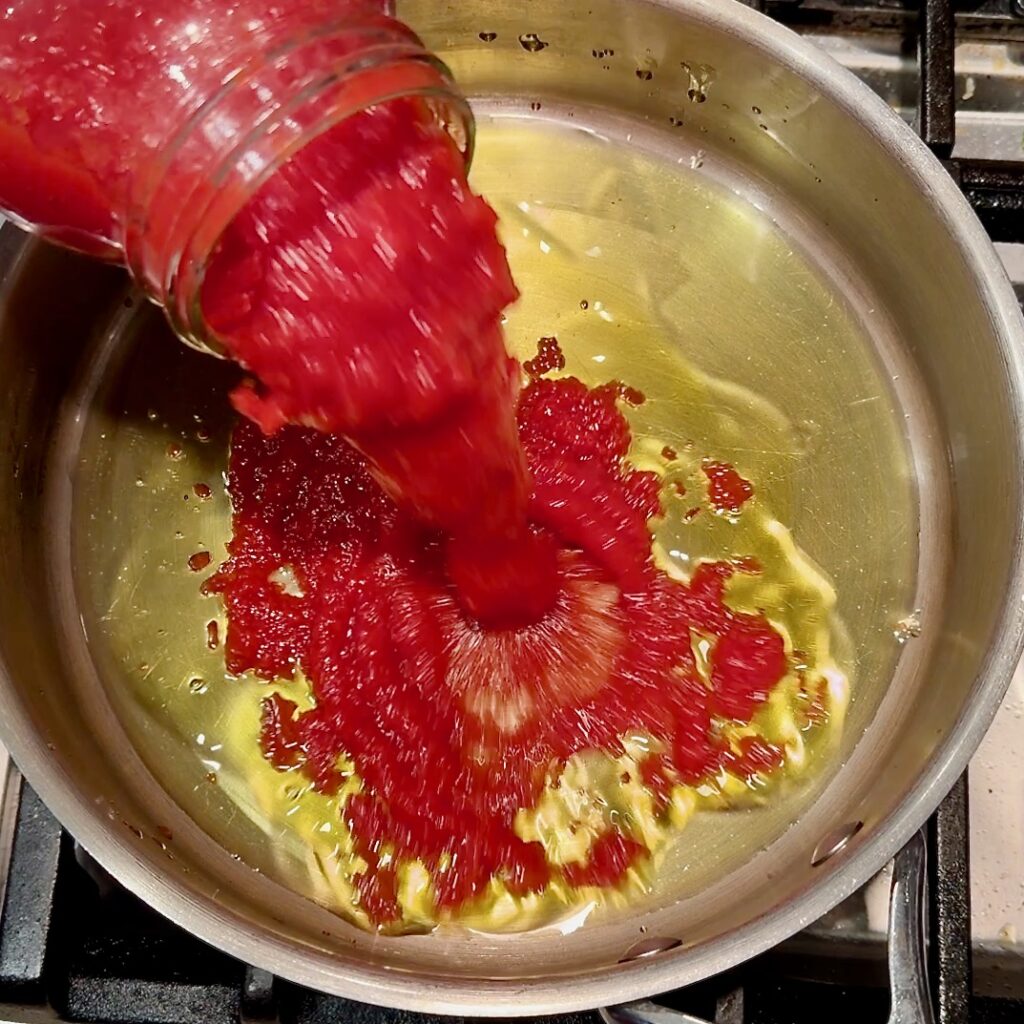
Add the olive oil into the sauce pan. If you are adding the onion, let the oil heat up a little, then add the onion. Once the onion has softened, add the sauce. If you are not adding the onion, then skip straight to adding the sauce as described below. Pour in the tomato sauce slowly to avoid splattering. If you are using the store bought strained tomatoes, add a tiny bit of water in the jar, close the lid and shake it. You can add this to the sauce pan as well. If on the other hand you have a home made jar of sauce available, you will not want to add more water as this sauce is more watery than the store bought variety.
2
Step 2
Season with a pinch of salt and stir. Place a lid on the sauce pan and bring to a boil. Once it begins to boil, reduce the heat to let the sauce simmer. Move the lid so it is slightly ajar to allow steam to escape.
3
Step 3
Every so often stir the sauce to prevent sticking or burning at the bottom of the pan. Continue cooking until it has thickened. If it looks watery, keep cooking on low heat.
4
Step 4
Just before it is fully cooked (the way you like it) give it another taste and adjust the seasoning if necessary. If you are adding basil, now is the time to do it.
5
Step 5
The sauce is ready to be used in which ever way you like. You can store it in the fridge cooked for a couple of days. Simply warm it up whenever you need it.
Fired Up Flavours Tips
Why You’ll Love This Dish
About This Dish
Never, is sugar added to tomato sauce. If you make your own tomato sauce, then you would have used very ripe tomatoes, which are sweet. The store bought varieties should have that all figured out already. One thing you must be sure to do when you are buying strained tomatoes, is to use a high quality brand.
Some like to add garlic or onion, but rarely both. Sometimes, I will use onion if I feel the recipe I am preparing will benefit from the extra flavour onion adds to the sauce. However, 95% of the time my sauce is simple.
The other ingredient alway used in making tomato sauce is olive oil. It matters a lot. It’s a core ingredient. Therefore, the quality of the olive oil matters. Olive oil is also important because it helps bind the sauce.
Then there is the basil. It brings a distinct flavour to the tomato sauce. Not everyone like basil in the sauce. Its not a core ingredient, but it is routinely used to round out the sauce. I don’t like to add basil too early. The amount of cooking is too harsh for the delicate basil. I add it at the end and let it cook for about 10 minutes. Enough time to flavour the sauce.
It freezes beautifully and stores exceptionally well. A large batch made over the weekend can rescue weeknight dinners all month long, acting as a base for pizza, braised meats, or a quick bowl of pasta.
The Author

John
Founder and recipe developer at Fired Up Flavours. John cooks the food he actually eats, Sunday pastas, big roasts, slow braises, and weeknight things that come together in thirty minutes, and writes the recipes the way he'd explain them to a friend at the counter.
The technique in video
watch & cook
Your Everyday Tomato Sauce
A short walkthrough of the technique and the timing that matters. John narrates the entire method in real time, with the camera staying close to the pan.
play videoSImilar Ingredients
See more recipes with similar main ingredients
More from this Category
Meat
Sausage and Rapini
Savoury Italian sausage sautéed with tender rapini, garlic, and olive

5 ★
RATING
45 min
cooking time
4 Person
serving size
fritter
Cuddrurieddri
Traditional Calabrian Cuddrurieddri, soft and fluffy potato-enriched dough, can be
5 ★
RATING
120 min
cooking time
10-15 Person
serving size
Vegetables
Melanzane Spaccogliate “Split Eggplants”
Oven-roasted eggplant halves stuffed with a golden, savoury blend eggs,
4 ★
RATING
120 min
cooking time
4 Person
serving size
legumes
Rapini with Cannellini Beans
Tender rapini and creamy cannellini beans sautéed with fragrant garlic,
4 ★
RATING
30 min
cooking time
4 Person
serving size