
Have you ever tried fresh pasta versus pre-packaged dry pasta? I’m referring to the authentic kind made in an Italian pasta shop, not the packaged variety you find in your local supermarket. The one obstacle to choosing fresh homemade pasta is the cost! It is very expensive. Yes, yes, I understand. You pay for quality……..it takes quite a bit of work and know how to make it. Clearly, despite the cost, there is demand for fresh pasta as the numerous thriving pasta shops in my area demonstrate.
What’s so special about fresh pasta? Whatever it is, it must justify the cost! I love pasta. In my life, I bought it a handful of times. Honestly, I make my own and it’s good. So, I understand why fresh pasta is great and what is involved in making homemade pasta. Simply, its texture is tender and silky. You taste and feel the flavour of the homemade variety that you made with your own hands. It actual holds on to sauce better because of its texture. It cooks very quickly – just a few minutes versus 10-15 minutes for dried pasta. Definitely, if you are gathering with family and friends, it will impress.
If you are a young man having a friend over, it’s safe to say you hit a home run. Or, you might decide to make it a social event and make it with family and friends as an excuse to get together, but then you must share any extras. I’m sure they wouldn’t be happy if they put in the time and walked away empty handed.
The reasons I make it at home are three-fold. First, I can control the ingredients, especially since my daughter and I are lactose intolerant and we both like ravioli filled with ricotta. Secondly, I control the quality. Meaning, that I am not a big fan of egg flavour in my pasta (I will explain in a bit). Third, besides food I like making money or saving money. I save a lot of money by making my own. And, oh yeah, I spend time making pasta with my family. Can’t put a price on that.
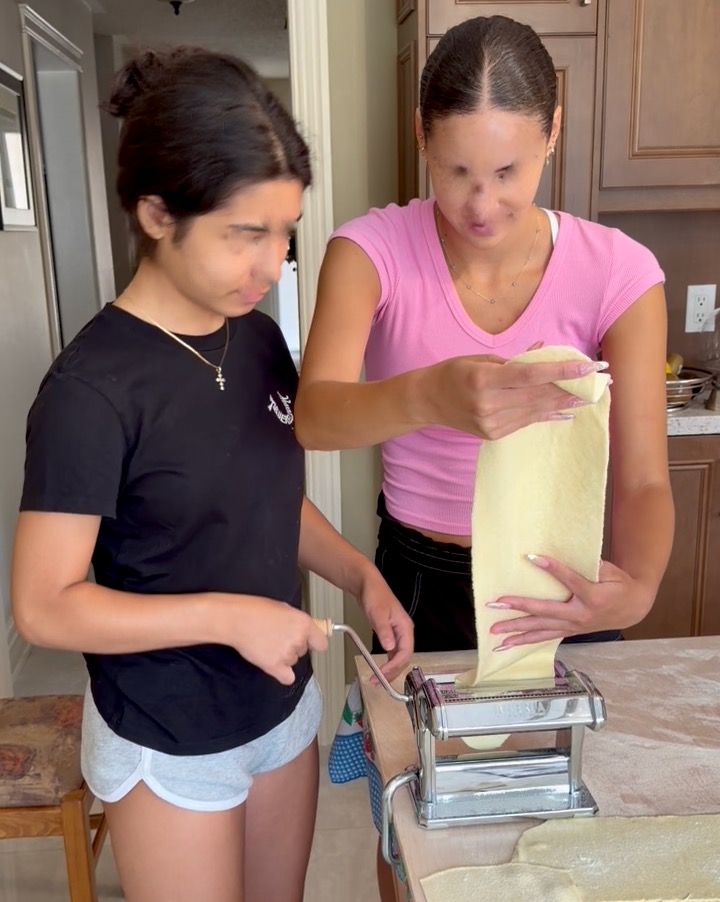
I like to make my pasta using flour that suits my nutritional needs. For example, I use flour that has a higher protein content. It takes longer to digest and is lower on the glycemic index. Next, as mentioned I am lactose intolerant. I purchase lactose free ricotta to make my ravioli stuffing. So, that addresses the first and second reason. Third, it is ridiculously expensive to buy. Fresh pasta can easily cost $5/100 grams or $22.5/pound. To put it in perspective, 454g of good quality dried pasta costs approximately $4-6. The point here is not to avoid fresh pasta, but to learn how to make it. Before you say forget it, I must tell you that in a short few minutes I had my 14 year old daughter and her friend making ravioli and fettuccini.
Let’s back up a bit. First, you will need to decide if you want to pursue making pasta with eggs or water. The outcome is vastly different in appearance, taste and texture. I acknowledge that using eggs makes that pasta silkier, but I find the egg flavour over-powering.
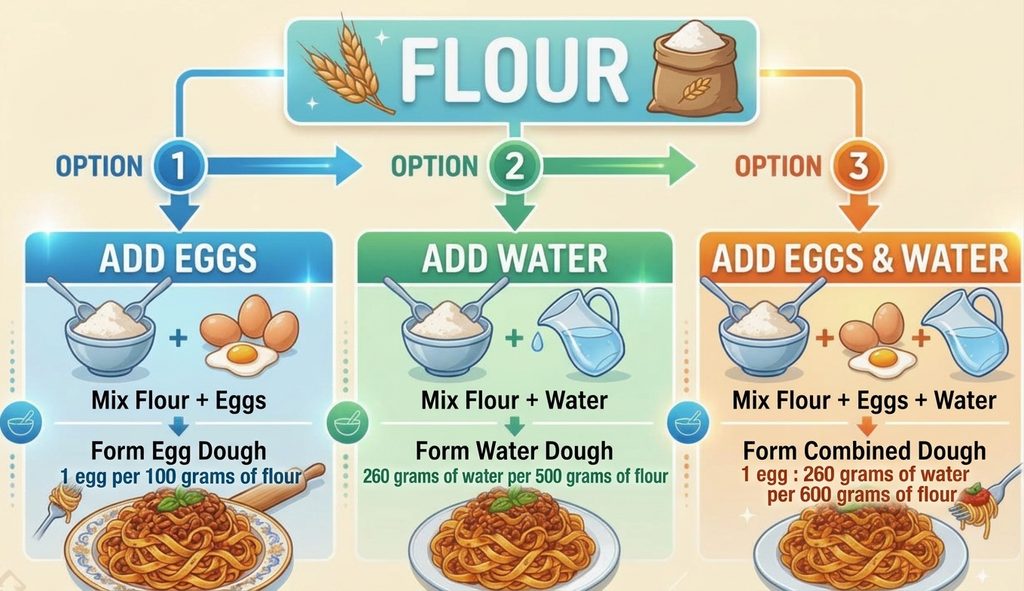
So, this is where the real battle begins. First, figuring out which dough mixture you want to go and then mixing the dough to the right consistency. It’s almost impossible to simply follow the ratio and get a perfect dough. There are so many factors at play, including the current environmental conditions. The humidity level really makes a difference. That means minor adjustments will always need to be made; either add more water or flour. It’s better to have a dough that is too moist and add a little more flour. So, if you are going to make a miscalculation, its better if the dough mixture requires more flour. In that case you add flour until you have it right. What does that look or feel like? If the dough sticks to your fingers, you need more flour. You have the proper consistency if you poke the dough and it bounces back without sticking to your fingers.
You can use any flour to make pasta. However, I find that a blend of 75% ground semolina and 25% all purpose works out very well. I use mostly water and depending on the quantity of pasta I will add one or two eggs. The eggs are beneficial because they give the dough more elasticity and workability. Keeping it down to just a few eggs gives me the best of both worlds; dough that is easy to work with and minimal or no egg flavour.
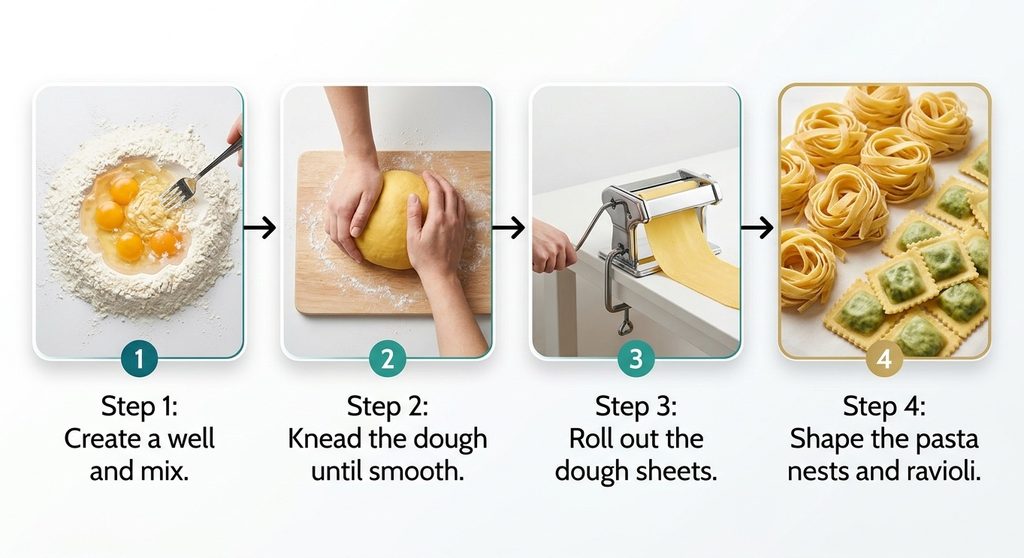
Lastly, you will need a pasta machine. Mainly because it helps to convert dough into pasta sheets that then are shaped into your favourite pasta. The illustration above demonstrates the four main steps, but in reality it is a little messier.
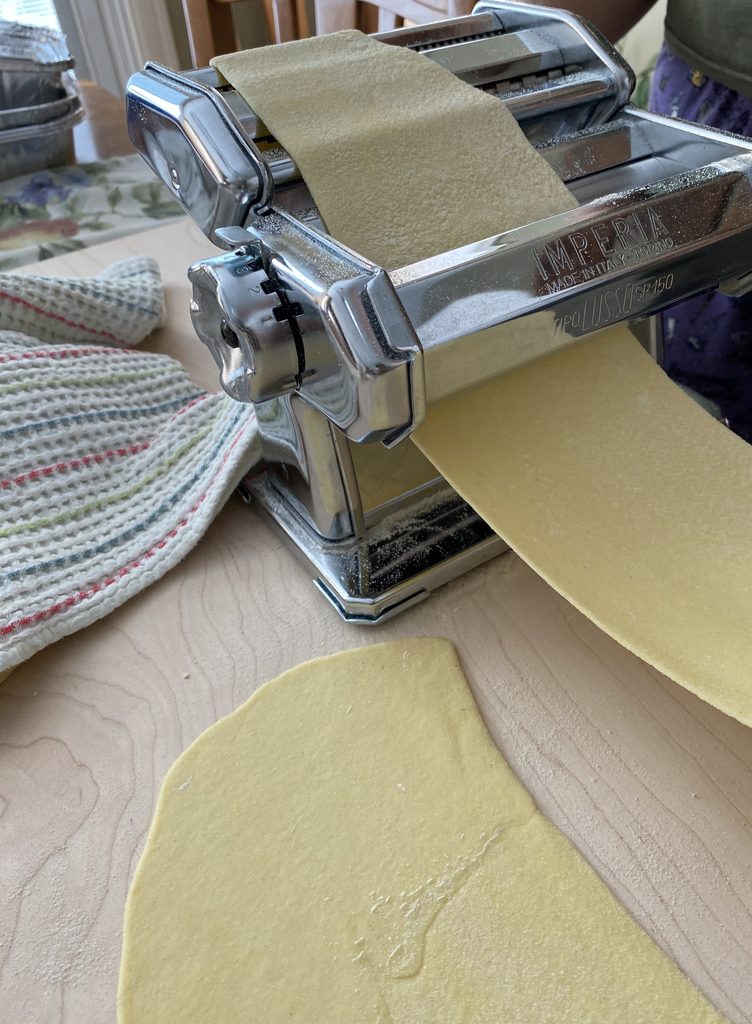
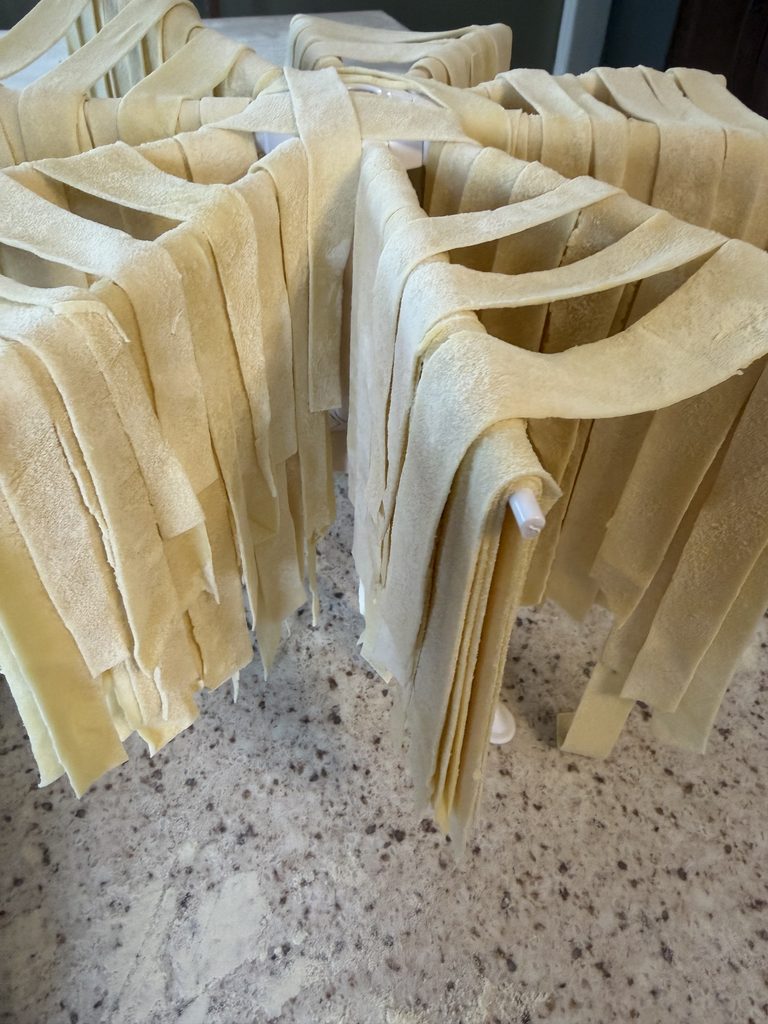
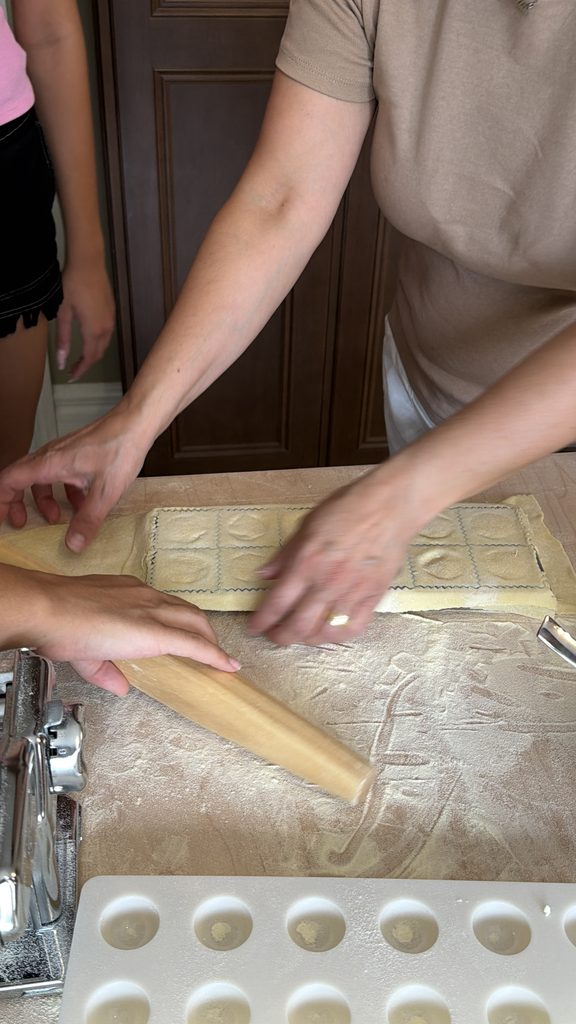
Here is a great tip. The more rustic you keep your pasta shape the more forgiving it is. At least until you have done it several times and get a better understanding of what is required.
And, oh yeah, make sure you have some help. It’s less work and more fun!